Press "Enter" to skip to content
Skip to main content
33 Checkpoints: quality printing at the speed you need.

All Products
Catalogs and Booklets
All Products

Standard Backdrop Sizes and Their Common Uses

Key Points:

  • Standard backdrop sizes strike a perfect balance between visibility, portability, and ease of setup.
  • Using standard backdrop sizes offers many benefits, including professional appearance and compatibility with standard frames and stands.
  • In certain situations, custom-sized backdrops are a better option than standard sizes, especially for venues with unconventional wall dimensions or shapes, unique branding needs, and specific creative requirements.

With the right size, custom-printed backdrops create a professional background for events and photo ops. They also hide distractions, control the focus of photos, and serve as a subtle promotional tool for sponsored events.

Backdrops, which are typically made of vinyl or fabric, are also used in photography studios to create a clean, visually appealing background that helps the subject pop.

The table below can help you pick the “ideal” standard backdrop size.

Types of Backdrops Standard Sizes
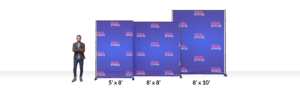
Step-and-Repeat Banners
  • 8’x 5’
  • 8’ x 8’
  • 10’ x 8’
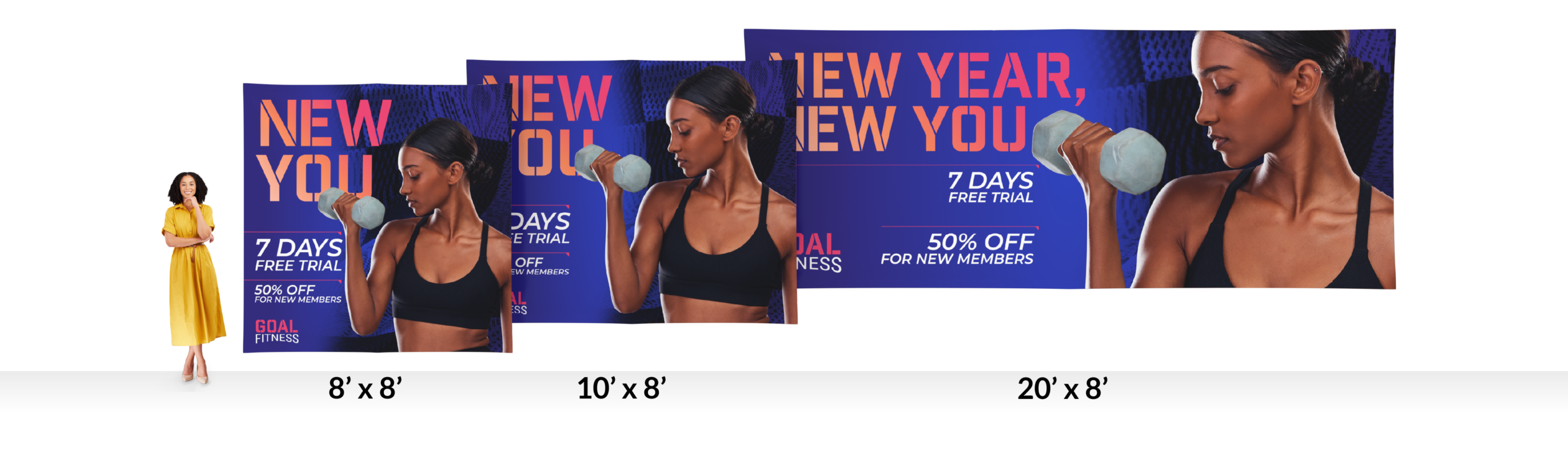
Trade Show Backdrops
  • 8’ x 8’
  • 10’ x 8’
  • 20’ x 8’
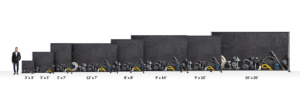
Photography Backdrops
  • 3’ x 3’
  • 5’ x 5’
  • 7’ x 5’
  • 7’ x 12’
  • 9’ x 14’
  • 8’ x 8’
  • 9’ x 10’
  • 10’ x 20’
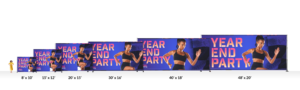
Stage Backdrops
  • 8’ x 10’
  • 15’ x 12’
  • 20’ x 15’
  • 30’ x 16’
  • 40’ x 18’
  • 40’ x 18’
  • 48’ x 20’

Step-and-Repeat Banner’s Standard Sizes

This photo backdrop is often seen at red carpet events, product launches, and trade shows. It features a repeating pattern of logos or graphics to create a branded photo background.

Most step-and-repeat banners have a vertical measurement of at least 8’ to accommodate a full body shot. However, their width varies greatly, depending on the number of subjects in the frame.

  • 10’ x 8’ is the most popular size for business events because its width is large enough to fit a group of 7-8 people in a photo.
  • 8’ x 8’ can fit a small group of 4-5 people.
  • 8’x 5’ is typically suitable for small casual events like birthday parties.

Trade Show Backdrop’s Standard Sizes

Portability is one of the most important requirements for backdrops meant for trade shows and temporary venues, which is why standard sizes are great options because they strike a perfect balance between high visibility and portability.

  • 8’ x 8’ is the most common size for smaller booths.
  • 10’ x 8’ is the go-to option for a 10’ x 10’ booth, which is the standard booth size for trade show participants or vendors.
  • 20’ x 8’creates a continuous backwall display for larger booths.

Photography Backdrop’s Standard Sizes

Subject count is one of the most important factors when picking a backdrop size. As a general rule, the more people in the frame, the wider the backdrop you need.

Large photo studios often need extra-wide backdrops to capture movement, especially when shooting dancers and other artistic performers.

  • 3’ x 3’ is typically enough for product photo shoots.
  • 5’ x 5’ and 7’ x 5’ are great for headshots.
  • 7’ x 12’ and 9’ x 14’ are suitable for full-length portraits.
  • 8’ x 8’ and 9’ x 10’ are suitable for small groups of people, or 2-4 subjects.
  • 10’ x 20’ is ideal for larger group photos.

Stage Backdrop’s Standard Sizes

With the right size and design, a stage backdrop creates a professional, distraction-free frame for performers and speakers. To pick the right dimension, consider the venue size, the performance type, and your artistic visions.

  • 8’ x 10’ and 15’ x 12’ are suitable for small stages.
  • 20’ x 15’, 30’ x 16’, and 40’ x 18 are usually the go-to options for conferences and auditoriums.
  • 40’ x 18’ and 48’ x 20’ are common sizes for large venues like theaters and concert halls.

When to Use Custom-Sized Backdrops

Custom-sized backdrops might be a better option than standard sizes in some situations. Here are the reasons you may want to consider non-standard dimensions for your photo backgrounds.

  • Your venue has non-standard wall shapes or unusual ceiling heights.
  • You have specific branding needs. If your brand often hosts large events, opt for bigger backdrops to accommodate group photos.
  • You have specific creative requirements. Your subject (people or products) and creative visions will determine the ideal size for your backdrops.
  • Portability is a critical requirement. Trade show participants and photographers who frequently change locations may need more compact backdrops.


How to Choose the Right Backdrop Size

These are the factors you need to consider when picking a size for your backdrop:

Venue. Measure its width, depth, and ceiling height.

Number of Subjects. An 8’ x 5’ backdrop fits 1-2 subjects, while 9’ x 10’ and 10’ x 20’ size options are suitable for group photos.

Shot Type. Headshots require smaller backdrops, while full-body and group shots require backgrounds with extra width and height.

Creative Requirements. Opt for extra-large backdrops if you need extra room for props and dynamic poses and movements, or you want a seamless transition from the wall to the floor.

Branding Requirements. If your brand often hosts or sponsors large events, you may want to invest in extra-wide backdrops.

Tip: It’s better to have a bit of extra space than to limit your composition, as you can always crop your photos.


The right backdrop size serves as an effective focal point that commands attention without overwhelming the space. It also meets your creative needs and specific requirements, like portability and ease of setup.

For branded backdrops, the right size ensures that all text, logos, and graphics are clear and readable from a distance.