

During election season, voters see campaign materials everywhere, like yard signs, postcards, and flyers from volunteers. When these materials look consistent, it’s easier for people to recognize your campaign. You can create a strong political brand that ties your message together across all your printed materials by using the same colors, messaging, and design.
In this guide, we will show you how to keep your campaign’s printed materials consistent, as well as provide some of the best practices you can incorporate to make your voter outreach more engaging.
Political Campaign Branding at a Glance
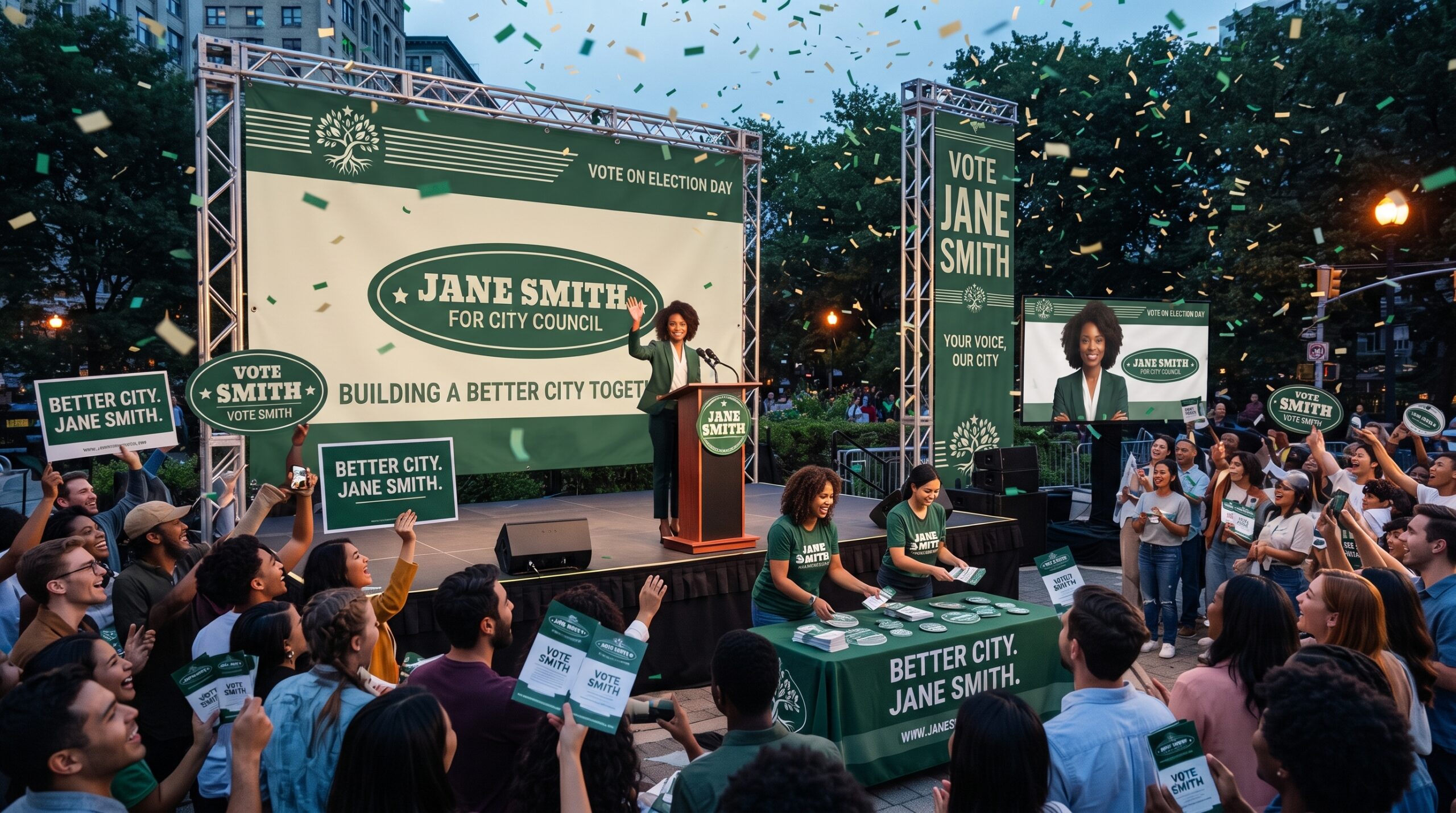
Political campaign branding is how a candidate’s visuals and messages help voters recognize their materials. The strategy usually works when every campaign piece looks and sounds connected. When displaying campaign materials, people can immediately recognize and associate them with a candidate through the colors, logo, fonts, slogan, imagery, style, and core messaging. Professional layouts should reinforce these standards at every voter touchpoint.
What Makes a Political Campaign Brand Memorable?
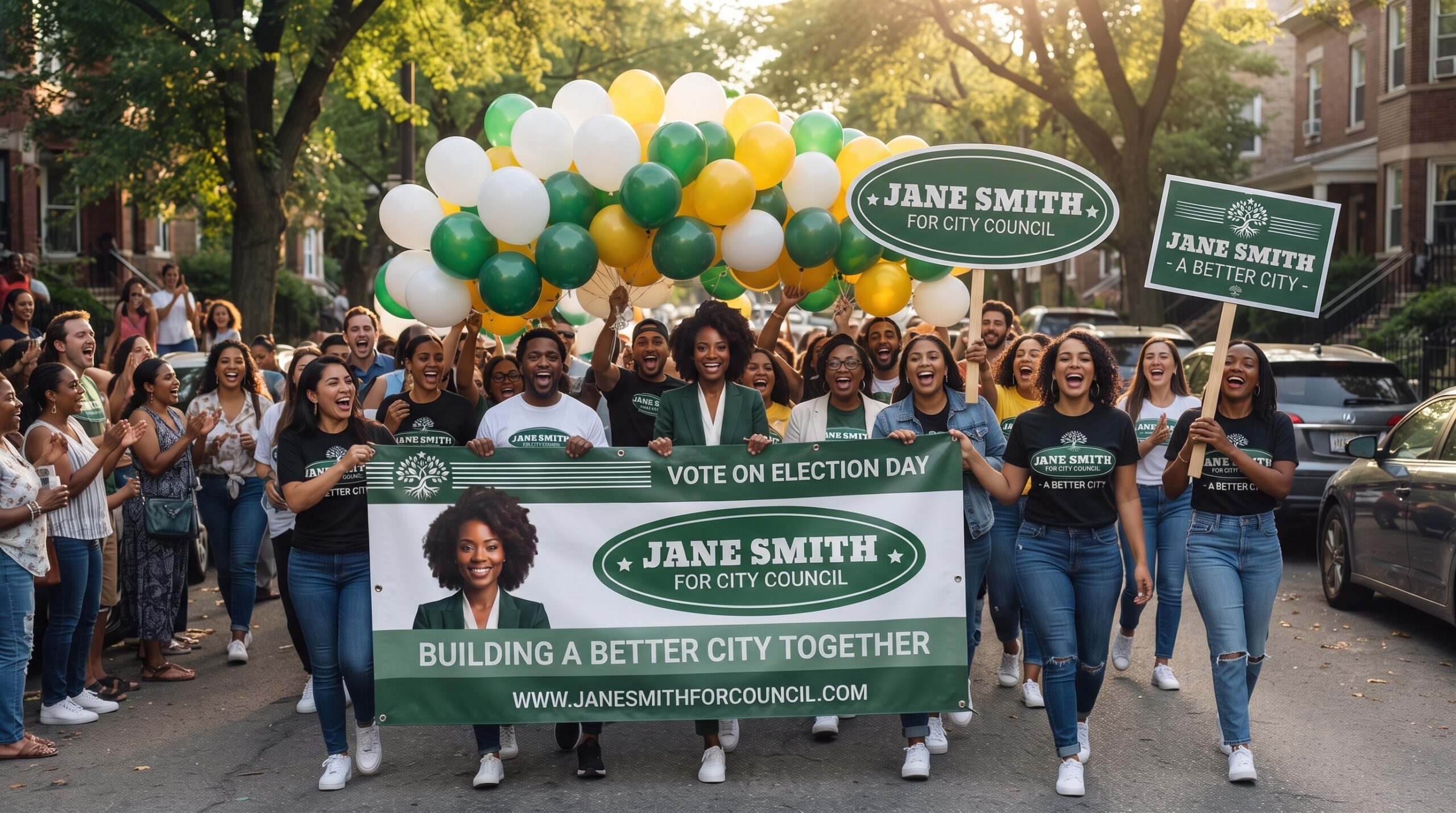
Memorable campaign branding typically shares these four characteristics:
- Simple: Clear branding makes it easy for voters to recognize the candidate and understand their message.
- Consistent: All campaign materials should use the same visual style.
- Recognizable: An original design that stands out helps voters spot campaign materials wherever they see them.
- Repeated: Showing campaign materials often help people remember the campaign during the election.
The goal of consistent branding is not to make all your print materials identical, but to establish a strong identity in each piece that helps in every voter interaction.
If you are looking to make an election campaign plan focused on consistent branding, you should first know the fundamentals.
The Core Elements of Political Campaign Branding
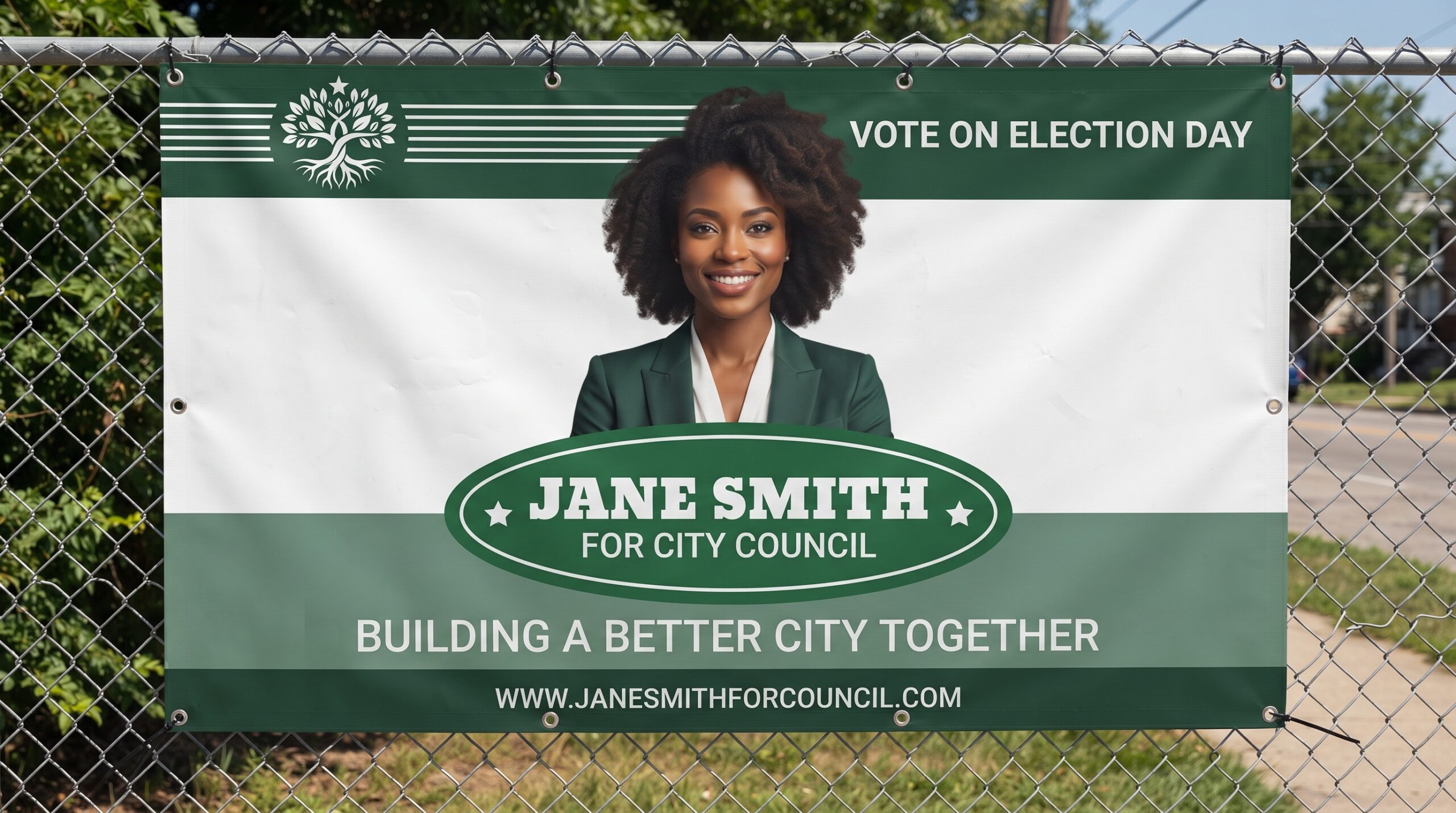
Most political campaigns use a set of recognizable elements that stay the same wherever voters see them. These elements work together to create a clear visual identity that helps voters connect with the candidate and the campaign.
Candidate Name
The candidate’s name is the base of the brand and should stand out right away.
Pick one standard way to show the name, such as:
JANE SMITH FOR CITY COUNCIL
Use the same wording, capitalization, size, and placement for the name on all materials. Try not to switch between different versions or shortenings of the name, since this can make the brand less consistent.
Campaign Logo
The campaign logo acts as a visual signature, tying the candidate’s name and overall identity together.
Make sure the logo is simple, easy to read, and looks good at any size. Use the same main logo on all key materials, like yard signs, postcards, flyers, banners, and door hangers.
Campaign Colors
A set color palette helps voters quickly link different materials to your campaign. Choose one main color for the brand, a second color for supporting parts, and a third accent color for highlights.
Stick to the same color palette on all materials instead of adding new colors for each piece.
Typography
Typography helps keep a consistent look at campaign materials. Pick one easy-to-read font for headlines and another for body text and set standard sizes and styles for common information.
Use these same font choices for flyers, mailers, signs, and other materials so everything feels connected, even if the layouts or content change.
Campaign Slogan
A campaign slogan sums up a key idea that voters can quickly understand and remember.
Keep the slogan short, clear, and easy to repeat. It can focus on leadership, community, accountability, growth, or another campaign goal.
Once you have a slogan, use the same wording on all materials instead of changing it often.
How to Create Consistent Print Materials

If you are running an election campaign, set clear standards before you start making materials. This is easy to do and just takes two main steps to make sure everything looks connected and recognizable.
1. Create a Campaign Brand Guide
Make a simple brand guide that lists the approved logos, colors, fonts, candidate photos, slogans, and design examples. Everyone working on the campaign, from staff and volunteers to print vendors, can use these standards when creating materials.
- Always use the official logo files and do not make new versions.
- Choose the exact campaign colors and fonts, so everything looks the same each time you print.
- Set clear rules for which candidate photos, slogans, and layouts to use.
2. Keep Messaging Consistent
Branding is also about what your materials say. Pick a few main themes, like economic priorities, education, public safety, or community values, and repeat them in all your voter communications.
- Make sure your main campaign priorities stay the same in all your materials.
- Change the supporting details for each audience but keep your main message the same.
- Use the same wording across different campaign pieces so they feel connected.
Political Campaign Branding by Product
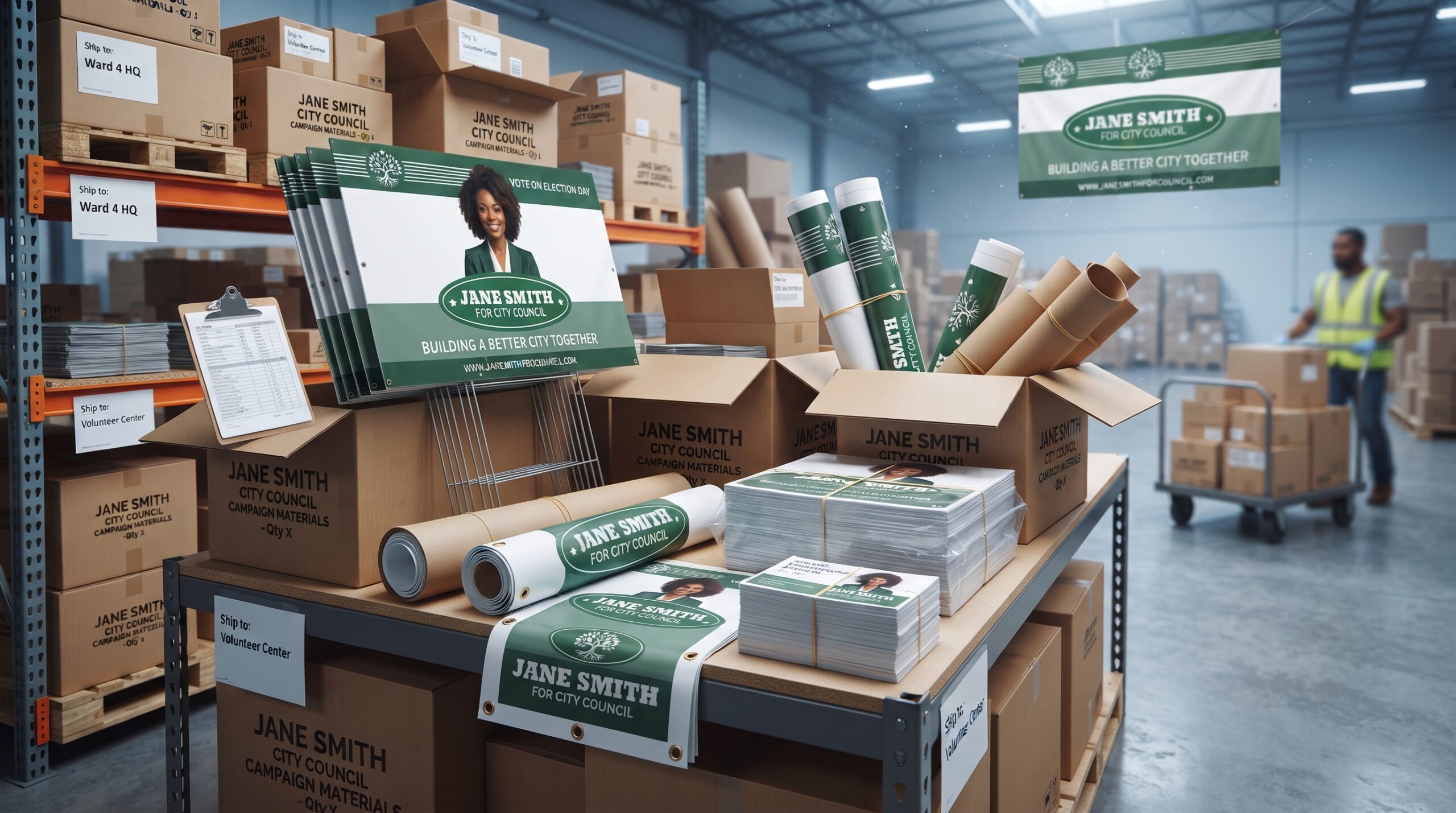
Once you have your brand guide and messaging, it’s only a matter of applying them to your election materials. Each printed item serves a specific purpose, so adjust the layout as needed, but always keep the main branding elements consistent.
- Campaign Flyers: Use the same colors, logos, candidate photos, slogans, and contact details when introducing candidates, promoting events, or recruiting volunteers.
- Political Door Hangers: Make the candidate’s name stand out, use the same colors, and keep the message easy to read when you’re canvassing or encouraging voter turnout.
- Political Direct Mail Postcards: Use familiar candidate photos, fonts, colors, and messages. Adjust the postcard content to persuade voters, target specific groups, or support early voting outreach.
- Political Campaign Yard Signs: Make the candidate’s name large, use recognizable colors, and place the logo clearly so voters can spot the campaign quickly from a distance.
- Campaign Banners: Use large logos, campaign colors, and familiar slogans to create a clear backdrop for rallies, fundraisers, community events, and media appearances.
Build Political Recognition Through Branding and Consistent Campaign Materials
Political campaign branding is ultimately about making every voter interaction feel connected. Whether voters encounter a flyer, a direct mail postcard, a door hanger, a yard sign, or a campaign banner, they should immediately recognize the candidate and remember the core message of the campaign.
By setting clear branding standards, keeping print materials consistent, and using the same visual identity throughout the election, campaign managers help create a stronger and more memorable experience for voters.