
Your letterhead design plays a critical role in establishing professionalism and brand identity, factors that help your business build trust and loyalty among existing and potential customers.
If you are not sure what makes a good letterhead design, we share valuable design tips and best practices to help you create an eye-catching and memorable one.
1. Understand the importance of a letterhead.
Understanding the role of a letterhead can help you create a design aligned to your brand and values. Here are some reasons why a clever letterhead design is important:
- It creates a consistent look recognized across communication tools, from business cards and envelopes to documents and notepads.
- It creates a great first impression.
- A letterhead with essential contact details makes communication easy between you and your business partners or clients.
2. Check your competitors’ letterheads.
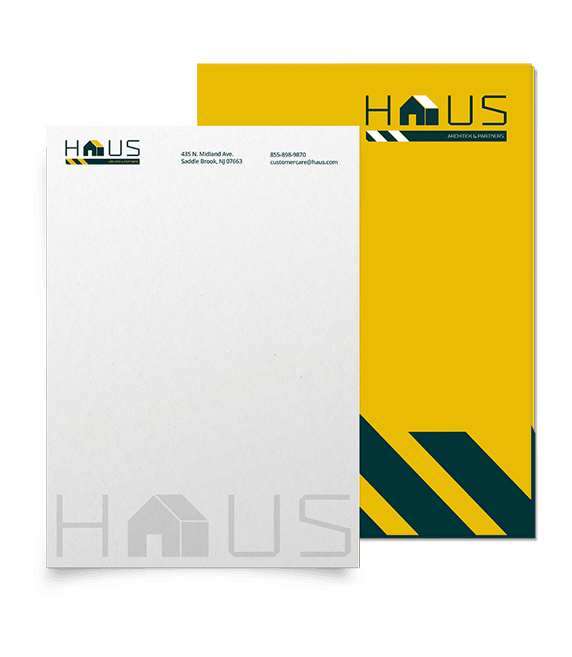
Your brand colors help establish your brand’s personality and values across all official communications.
Here are some best practices when incorporating brand colors so that your letterhead becomes even more recognizable:
- Stick to your brand colors. If you must use other colors, use them sparingly, whether it’s to highlight some design elements, borders, or accents.
- Use white or a very light color for the writing area.
- Avoid dark backgrounds. Scanning or faxing letterheads with this design feature produces less-than-optimal copies.
Although there are free design templates to help you create professional-looking letterheads, it can be helpful to check out what your competitors are doing. Here’s what you should do:
- Gather letterhead samples from your direct competitors or companies in a similar industry.
- See how they use color, spacing, and logo placement.
- Identify what feels overdone, outdated, or just right.
- Decide whether you want to follow the standard format or use a more unique layout.
3. Get inspiration from multiple sources.
Explore inspiration boards on Pinterest and check out the social media accounts of brands and professionals you admire. You can also get creative ideas offline, like postcards and business notepads.
4. Put yourself in your customers’ shoes.
Although your letterhead design should highlight your brand, your customers’ expectations and needs remain the most important considerations. Companies that cater to clients who need fast and accessible service can benefit from a design that prominently displays their contact details or a short list of branches.
5. Incorporate your brand colors.
Your brand colors help establish your brand’s personality and values across all official communications.
Here are some best practices when incorporating brand colors so that your letterhead becomes even more recognizable:
- Stick to your brand colors. If you must use other colors, use them sparingly, whether it’s to highlight some design elements, borders, or accents.
- Use white or a very light color for the writing area.
- Avoid dark backgrounds. Scanning or faxing letterheads with this design feature produces less-than-optimal copies.
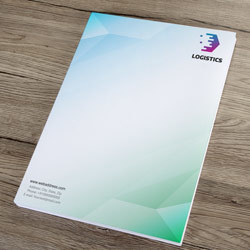
6. Enhance your design with high-quality graphics.
Graphics in a letterhead include your logo, illustrations, stylized typography, and abstract patterns. If you use them with care, you can enhance the design rather than make it look “busy” and cluttered. Here are some tips when incorporating graphics into your letterhead design:
- Place your logo at the top center to achieve a formal, traditional feel. By contrast, positioning it at the top left or top right gives your letterhead a more contemporary design.
- Consider using a subtle background image to make your stationery more distinctive.
- Use simple lines or shapes to separate different sections (like contact details from the writable area) or guide the user’s eye.
- Keep the body text area clear to make the content easier to read.
7. Choose fonts that match your brand.
As a general rule, choose typography that is readable and consistent with your brand identity. You can achieve this goal by following these tips:
- Review your marketing materials, websites and other online platforms, and communications tools (such as business cards and branded envelopes) to see which fonts are used.
- Use fonts that reflect your brand’s personality (e.g., professional, authoritative, friendly, or warm).
- Choose readable and legible font sizes. For the body copy, it’s usually between 10 pt. and 12 pt.
- Avoid heavily stylized or decorative fonts.
8. Use premium paper stock.
Choose premium paper stock when printing letterheads to create a strong first impression. Correspondence printed on substantial paper stock signal professionalism and that your company values quality. Here are the features you need to consider when choosing a paper stock for your letterhead:
- Texture. A smooth, texture-free finish is ideal for everyday office use and formal correspondence, while paper with a slightly varied texture gives a handmade or rustic feel.
- Brightness and color. Always ensure excellent readability and consider the final print quality when choosing your letterhead’s color and brightness.
- Paper weight or thickness. The ideal letterhead paper should be thicker than a standard copy paper but thinner than a cardstock. 70 lb. paper is considered the “sweet spot” because it offers excellent durability and premium feel without being too thick.
- Virgin vs. recycled paper. Choose virgin paper for premium print quality and brightness. On the other hand, use recycled paper if you want to prioritize highlighting your brand’s sustainability efforts to customers, suppliers, and business partners.
9. Choose standard paper sizes.
Using standard letterhead sizes, such as US Letter (8.5” x 11”), is cost-effective because they are compatible with standard printers, envelopes, and automated mail machines. They are also easy and convenient to store and distribute.
10. Review your letterhead design.
The goal is to maintain brand consistency and ensure accurate information, especially your company address, phone numbers, and website URLs. When reviewing your design, also pay close attention to these elements:
- Colors, spacing, and margins
- Logo and other visual brand elements
- The font’s legibility and readability
- The presentation of content when the letterhead is folded in thirds. This is especially important for letters that use envelopes with a clear window.
A well-designed letterhead helps you build a professional and credible brand image, reinforce brand identity, and serve as a subtle marketing tool.