

Folders are a staple for organizing documents, whether you’re using them for your brand, prepping for meetings, handing out materials, or assembling sales kits — they get the job done. With the right folder size, you can ensure that everything looks neat, professional, and presentable. So, how do you know which size to go for? In this guide, NextDayFlyers explains the standard folder sizes to help you avoid issues before you print or buy.
Why Folder Sizes Matter
Do folder sizes matter? Absolutely! They’re not just used to hold documents; they’re also a reflection of your brand. Here’s why:
Presentation and Impressions
Using the right folder size leaves a good impression on your business. It shows that you’re organized and value looking polished and professional at all times.
Storage and Durability
With the correct folder size, you can add an extra layer of protection for your documents and prevent them from sticking out, getting torn, or being misplaced.
What is the Standard Folder Size?
The most common and popular folder size is the 9” x 12”. This size is considered standard because it can easily store 8.5” x 11” letter-sized documents, which is the go-to paper size for businesses, schools, and more.
The Four Main Standard Folder Sizes
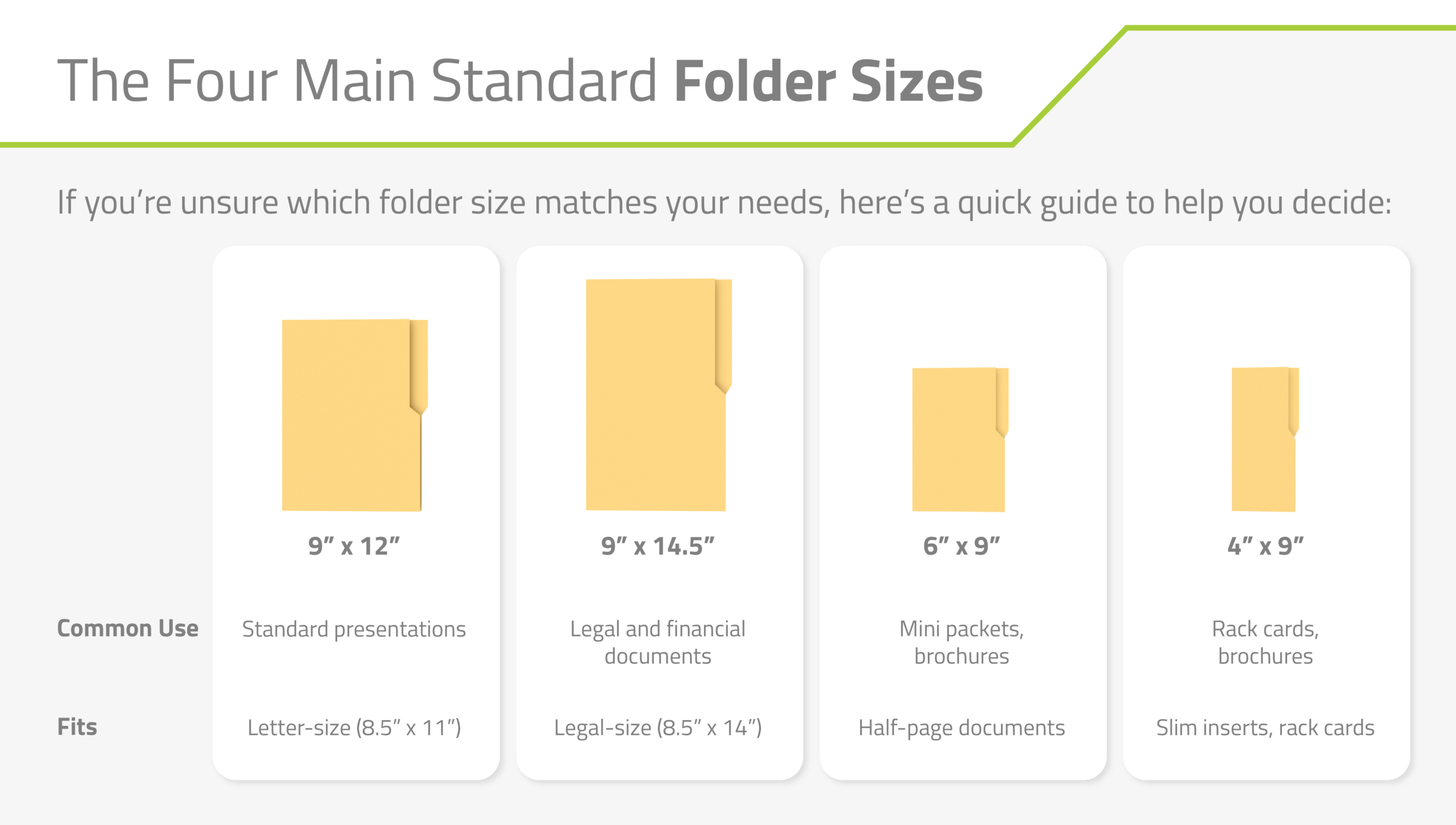
The most common and popular folder size is the 9” x 12”. This size is considered standard because it can easily store 8.5” x 11” letter-sized documents, which is the go-to paper size for businesses, schools, and more.
1. 9″ x 12″ Standard Letter-Size Folder
The most versatile folder size and the industry standard. It’s the go-to option for businesses, schools, and professional settings, as it can fit 8.5” x 11” documents.
Best Used For
- Sales presentations
- Business proposals
- Onboarding guides
- School materials
- Real estate files
Why Choose It
This size offers a polished and professional look. While it can be used primarily for documents, it also has enough room for a variety of materials, including brochures, flyers, and business cards.
2. 9″ × 14.5″ Legal-Size Folder
This size is designed specifically for 8.5” x 14” documents, which are longer compared to the standard 8.5 x 11” paper. Most industries use this folder size, especially if the files need to be flat and protected.
Best Used For
- Legal offices
- Real estate contracts
- Financial agreements
- Government forms
- Compliance paperwork
Why Choose It
Using this folder size ensures documents won’t stick out, bend, or be torn during handling. It’s perfect for storing important forms and other official paperwork.
3. 6″ × 9″ Mini Folder
The mini folder is compact and handy, suitable for half-page materials, lightweight packets, and small documents that are easy to carry around wherever you go.
Best Used For
- Brochures
- Small welcome kits
- Half-page documents
- Appointment reminders
- School, camp, or medical packets
- Event schedules
- Coupons and inserts
Why Choose It
Mini folders can be used in everyday situations. They’re portable, easy to hand out, and can hold smaller-sized materials really well. Whether you’re participating in a trade show, working at a clinic, or welcoming students, this folder size is just right for your needs.
4. 4” x 9” Slim/Rack Card Folder
If you’re looking for a tall and narrow folder, the 4” x 9” is the right size. This size is perfect for when you need something small, impactful, and easy to distribute and store.
Best Used For
- Rack cards
- Travel brochures
- Visitor guides
- Event handouts
- Slim hotel materials
Why Choose It
The slim/rack card folder can fit almost anywhere, while still protecting the materials inside it from crumpling, bending, or folding. You can slip it in bags, mailers, visitor packets, conference kits, and more. If you’re not distributing full-size documents and prefer a budget-friendly option, the slim/rack card folder is just for you.
Pocket Folder Features
Sometimes, a simple folder is not enough. If you want to give your folders an upgrade, you can consider adding pockets to make them functional.
NextDayFlyers’ Standard Pocket Folder Specs
- Pocket size: 3” for 4” x 9” and 6” x 9” folders, 4” for 9” x 12” and 9” x 14.5”
- Pocket count: Single or double pockets
- Business card slits: Vertical or horizontal, optional on one or two pockets
How to Choose the Right Folder Size
Picking the correct folder size is not only about knowing the dimensions, but you must also consider the following factors:
- Paper size – For standard Letter-size paper, choose the 9” x 12”. The Legal-size paper fits the 9” x 14.5” folder, while smaller inserts are more suitable for the 4” x 9” and 6” x 9” folders.
- Number of sheets – If your folders are holding multiple sheets, you might need a size that has a spine or larger pockets to ensure that nothing sticks out
- Inserts – What type of materials will you put in the folders? Will you insert brochures, business cards, forms, or longer documents? Consider choosing small folder sizes for half-page materials, large, tall folders for legal and professional documents, and adding pockets for functionality.
- Usage – Where will you use your folders? For presentations and meetings, pick large folders like the 9” x 12” and 9” x 14”, while events or handouts might only need smaller ones like the 4” x 9” and 6” x 9”, as they’re more budget-friendly and easy to distribute.
Tips for Designing Folders for Print
If you’re printing custom folders, follow these tips to make your folders look neat and professional:
- Add a bleed of 1/8” or 0.125” so that there are no white edges after trimming.
- Mind the safe zone. Keep text and images away from trimming areas so that nothing gets cut off.
- Consider pocket placement. Adding pockets to your folders can also take up design space. Make sure to measure pocket dimensions carefully
- Check the folder’s spine width if you’re inserting thick documents. Avoid overstuffing your folders and ensure that you can still close them.
- Maximize branding Make the most of your folders and use all visible areas for your logo, whether it’s the pockets, front cover, back, or spine.
Key Takeaways
- The most common folder size is 9” x 12”, which fits 8.5” x 11” Letter-size paper.
- 4” x 9” and 6” x 9” are more budget-friendly and best for smaller materials like brochures, business cards, and compact packets.
- 9” x 14.5” folders are designed for longer documents, legal-size documents, so that they won’t easily bend or fold.
- The correct folder size should keep materials neat, professional, and organized.
- Standard pockets and business card slits add functionality to folders and give them an upgrade.
When choosing the right folder size, you can never go wrong with the 9″ × 12″ presentation folder. It’s the most popular option for a reason because it can be used in a variety of applications. However, you might also want to consider other standard sizes, such as 4″ × 9″, 6″ × 9″, and 9″ × 14.5″, as folder sizes depend on the document size and purpose. At the end of the day, what matters the most is that your papers stay organized, look professional, and leave a lasting impression.